
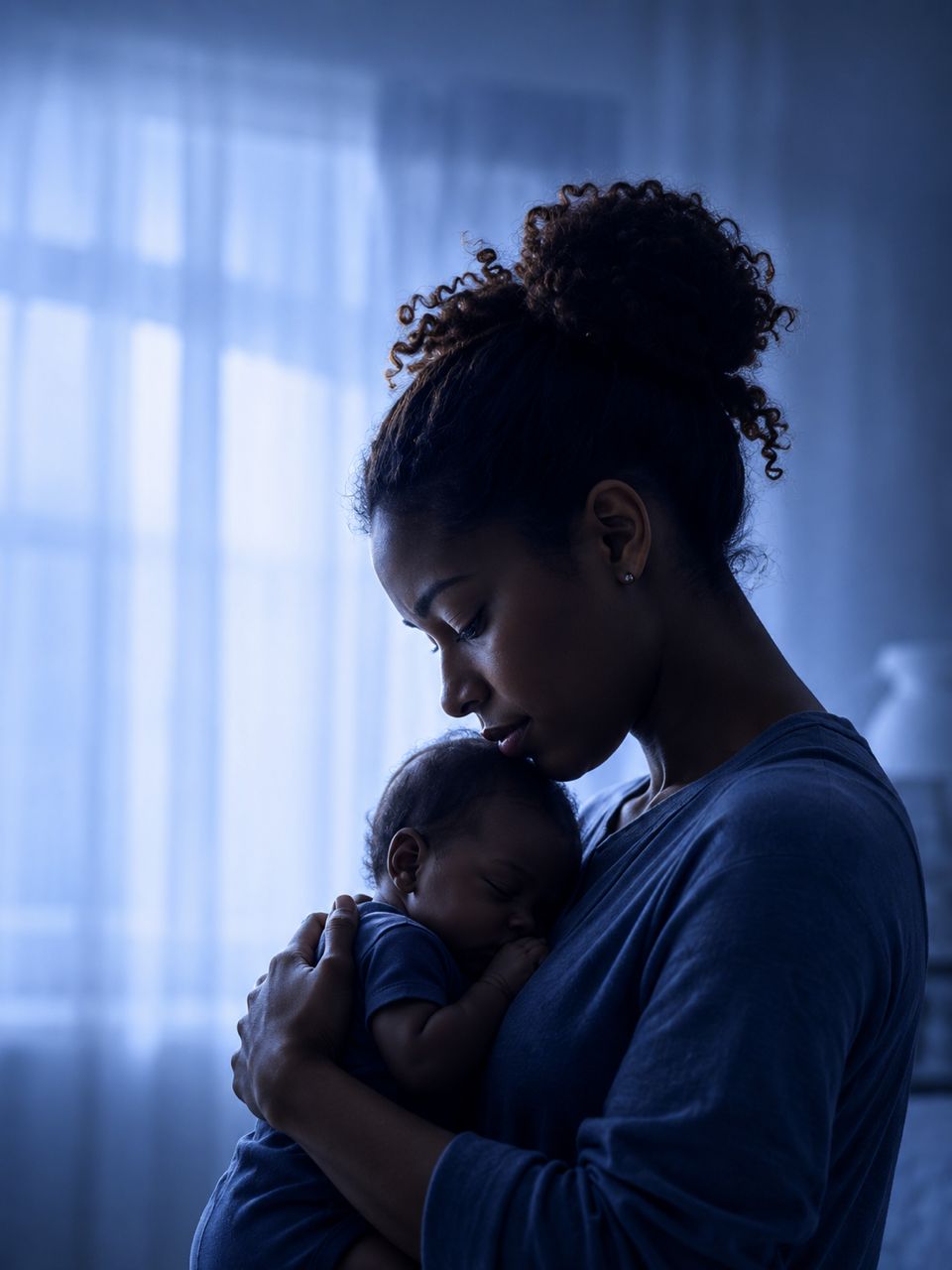
Somewhere in the world, a woman is rocking her baby to sleep at 2:17 a.m. The house is silent, but her mind is restless. Everyone assured her that motherhood would be beautiful, sacred, and fulfilling. They might not be lying, but they’re certainly not telling the full truth either. She saw glowing photos of smiling mothers wrapped in blankets, received congratulations on the baby’s arrival, and was asked about the baby’s weight, eyes, and name.
No one asked if she was okay. Even if asked, she’d reply, “I’m fine,” because that’s what strong women do. She smiles for visitors and laughs at their jokes about sleepless nights, but she hasn’t been herself for months.
Amidst the crying baby, swelling hopes, fear of judgment, and exhaustion that sleep can not mend, she begins to fade away. This is Maternal Mental Health.
Maternal Mental Health Week is not just another awareness campaign but a reminder that one of the most dangerous complications of pregnancy is often the one that does not bleed.
Maternal mental health conditions, clinically grouped as Perinatal Mood and Anxiety Disorders (PMADs), are now recognized as the most common complications of pregnancy and childbirth. Globally, about 10% of pregnant women and 13% of new mothers experience mental disorders. In developing countries, the numbers rise even higher: about 20% of mothers struggle with significant psychological distress.
In Nigeria, estimates place perinatal depression between 10% and 30%, while studies in southwestern Nigeria found anxiety symptoms in up to 39% of women in late pregnancy, yet 85% of cases go undiagnosed.
These are not “rare cases.” These are mothers in our churches, mothers in our lecture halls, in our homes smiling in family photographs while silently drowning.
We romanticize motherhood so aggressively that we forget mothers are first human beings. So when a woman says she is overwhelmed, she is called ungrateful. When she expresses emotional exhaustion, people remind her that “women have been giving birth for centuries.” When she finally breaks down, society suddenly acts surprised.
Maternal mental health is far deeper than the common “baby blues.” 85% of mothers experience temporary mood swings, emotional sensitivity, irritability, and crying spells shortly after childbirth due to rapid hormonal changes. These symptoms usually disappear within two weeks.
However, PMADs go beyond that. Perinatal depression affects roughly 1 in 5 mothers and can bring persistent sadness, hopelessness, loss of interest in life, appetite changes, emotional withdrawal, and difficulty bonding with the baby.
Perinatal anxiety can cause racing thoughts, panic attacks, chest tightness, and overwhelming fear.
Postpartum PTSD can emerge after traumatic deliveries, stillbirths, emergency surgeries, or neonatal complications.
Perinatal OCD may produce terrifying intrusive thoughts about harm coming to the baby, thoughts that are considered ego-dystonic (the mother herself finds them horrifying).
Postpartum psychosis, though rare, affecting about 1 to 2 in every 1,000 births, is a psychiatric emergency involving hallucinations, delusions, and loss of reality testing. This is considered ego-syntonic.
This is just as important as any other childbirth complications. Perhaps the obscure part is that maternal mental health suffering rarely affects only one person. The ripple effects travel outward like cracks spreading through glass.
Research links untreated maternal mental illness to preterm birth, low birth weight, poor infant nutrition, cognitive delays, emotional difficulties, impaired bonding, and long-term developmental challenges in children.
Children of severely depressed mothers are more likely to experience emotional insecurity and adverse childhood experiences that shape their entire psychological future.
Even fathers are affected. Studies show that 1 in 10 fathers experience perinatal depression, especially when their partners are struggling.
So, maternal mental health is more than a “women’s issue.” It is a family issue. A societal issue. A public health emergency.
Awareness alone will not solve this crisis. We can not hashtag our way out of maternal suffering. Solutions require actions (psychological, medical, familial, social, and behavioural).
First, we must normalize conversations around maternal mental health. A mother should be able to say “I am not okay” without fearing ridicule or shame.
Second, screening must become routine. Mental health assessments should be integrated into antenatal visits, postnatal care, and pediatric appointments. We routinely check blood pressure and fetal heartbeat; emotional well-being deserves the same seriousness.
Third, hands-on support and care should be provided. Practices like Omugwo among the Igbo, Ojojo Omo among the Yoruba, and Wankan Jego among Hausa communities are designed to support postpartum mothers through rest, guidance, food preparation, infant care, and emotional companionship. When done properly, they work beautifully. A supported mother is often a healthier mother.
There are also evidence-based behavioural and psychosocial interventions that significantly help maternal mental well-being. They include: regular exercise, massage therapy, support groups, adequate nutrition, and rest, amongst others. And yes, seeking professional help is very important.
Maternal mental health should not be a side conversation in childbirth, and the next step does not belong only to healthcare workers or policymakers. It belongs to friends, husbands, families, communities, and to every reader who now knows better than they did five minutes ago.
By Augustine Okeyade